ACUMEN and SYNCHROMODE Final Event: Brussels, 21-22 April 2026
On 21 and 22 April 2026, Brussels hosted the joint final event of ACUMEN and SYNCHROMODE, marking the conclusion of three years of research, pilot testing and collaboration across Europe. The two-day gathering brought together cities, transport authorities, researchers, industry representatives and EU policymakers to take stock of what had been achieved and to explore how the results can travel beyond the original pilot cities.
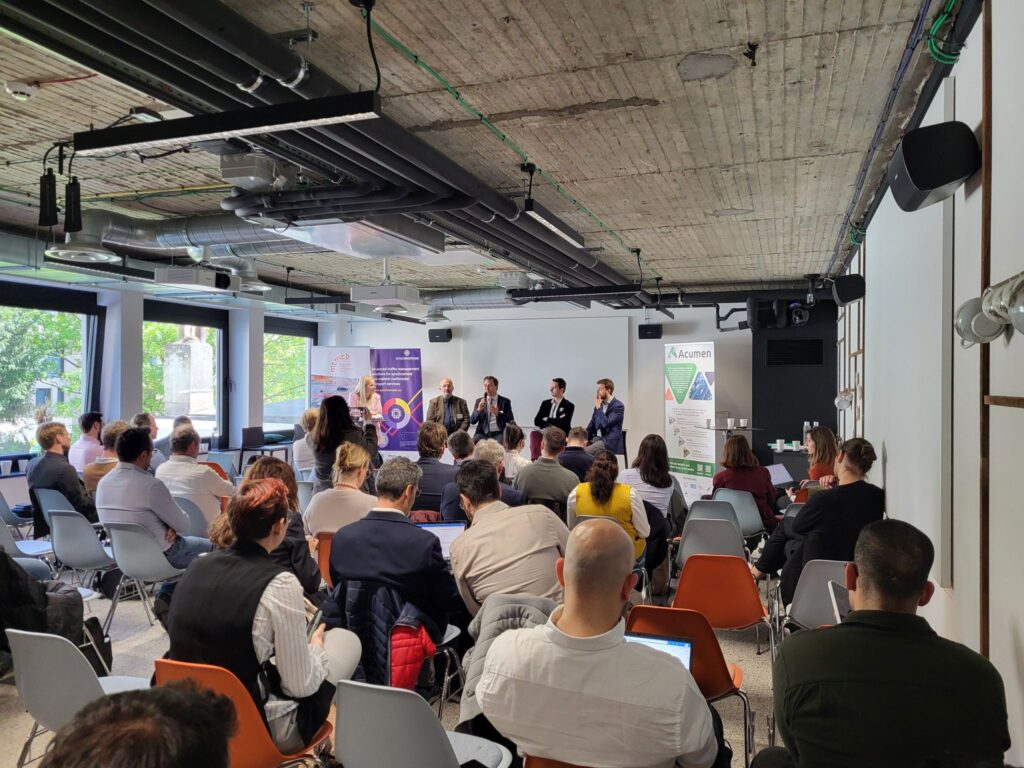
The first day opened with presentations from both projects, covering their respective approaches, results and lessons learned. This was followed by live demonstrations of the SYNCHROMODE Toolbox and the ACUMEN Digital Twin, with real scenarios drawn from the four ACUMEN pilot cities run in the room. A call for contributions had been issued ahead of the event, and the response added considerable depth to the programme. Five external presentations featured alongside the project results: CARMONY shared insights on traffic orchestration for cross-border highway management; metaCCAZE addressed the question of legal ambiguity in innovation projects; Aalto University presented Open Controller, an open and modular architecture for multimodal traffic signal control; Be-Mobile introduced Reflow, a tool for fast what-if analysis of road network changes; and Mobilysis demonstrated how drone-collected data can be used to uncover micro-disruptions in traffic. The day closed with a panel discussion and a cocktail reception.
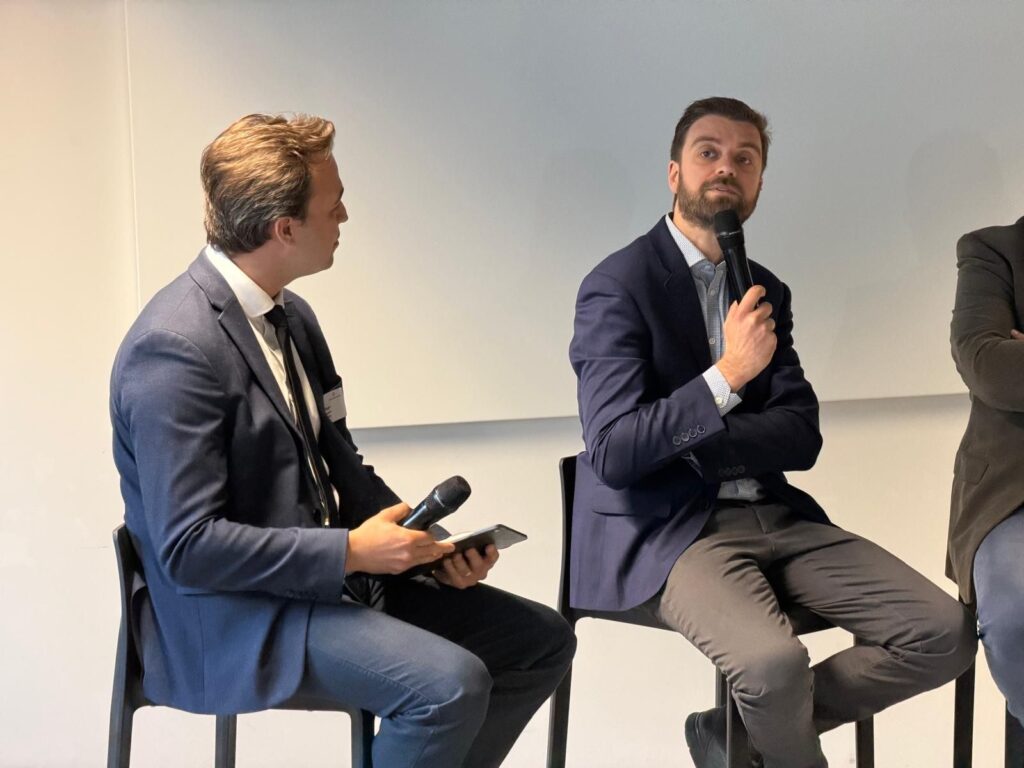
The second day opened with policy and governance presentations from both ACUMEN and SYNCHROMODE, followed by a panel discussion on governance and data harmonisation, one of the more persistent practical challenges in scaling solutions of this kind across different institutional contexts. The afternoon brought the pilot cities to the fore, with ACUMEN’s four pilots in Athens, Helsinki, Amsterdam and Luxembourg and SYNCHROMODE’s three pilots in the Province of South-Holland, Madrid and Thessaloniki each presenting their experiences, results and insights from the field. Between sessions, a tools demonstration and exhibition area gave participants the opportunity to engage directly with the solutions on show. The event closed with a panel discussion on the future of multimodal traffic management in Europe and an MTMC workshop looking ahead to the continuation of the MTM Cluster. As ACUMEN, DELPHI and SYNCHROMODE draw to a close, a new generation of Horizon Europe projects, namely FEDORA and MODALSHIFT, will carry forward the research agenda on network and traffic management for future mobility systems, building on the findings, tools and governance frameworks developed by their predecessors.
Over the course of the project, ACUMEN demonstrated that AI-supported tools can deliver measurable improvements in real urban conditions, including reductions in door-to-door trip delays, faster incident detection and better management of network disruptions. The project was equally candid about the complexity of AI in this context, consistently emphasising that its impact depends on the application, the data available and the methods used, and that building institutional trust requires transparency about limitations as much as potential.
As CINEA Project Officer Thiago Tavares noted at the event, the goal of projects like these is to anticipate the future and test it out, with results that can begin to shift mindsets. With four pilot cities and a body of deployable tools now in the public domain, ACUMEN leaves behind a foundation for the cities and transport authorities that follow.
