Methodology
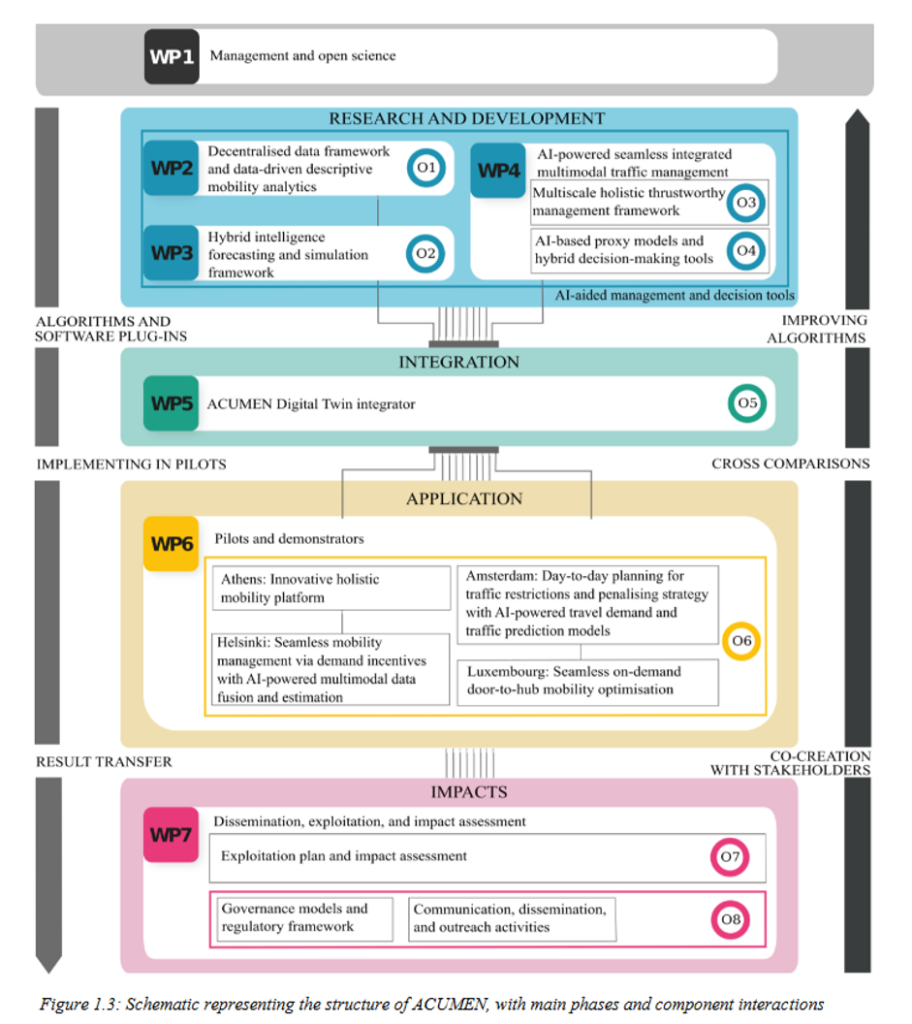
The methodology of the ACUMEN project revolved around the development of a modular, multi-layered Digital Twin, representing a digitised version of the urban mobility ecosystem. The Digital Twin encompassed various layers, including physical infrastructure, mobility services, human activities and digital infrastructure, with the ultimate goal of enabling decision-making for mobility through novel solutions and tools.
Phase I involved Research and Development, where academic and research partners worked on developing AI-aided management and decision tools using data science and traffic science methods. This included creating a decentralised framework with security and privacy considerations, processing data from multiple sources, and employing machine learning and AI techniques for extreme event detection and characterisation. The phase also focused on modelling and prediction methods for demand and traffic forecasting, with a particular emphasis on fairness, trust and resilience.
Phase II, the Integration Phase, involved the integration of all developments from Phase I into a novel ACUMEN platform, designed with functional and non-functional requirements in mind. Application programming interfaces connected the integrated ACUMEN services to the Digital Twin platform, which was then tested and demonstrated in real-life and virtual pilots in Athens, Amsterdam, Helsinki and Luxembourg.
Phase III, the Application Phase, showcased the generic Digital Twin platform in the pilot areas. Data collection was conducted using novel technologies such as GNSS-enabled vehicle trajectories and drones, with simulations carried out on platforms including Aimsun Next, MnMS and MATSim. The pilots focused on diverse transport management challenges and applications to validate and demonstrate the ACUMEN Digital Twin platform.
In Phase IV, the Impact Assessment Phase, well-established tools such as models for multicriteria analysis were used to assess the proposed solutions and pilots through quantitative and qualitative analyses. The results contributed to guidelines supporting cities and stakeholders in understanding the effects, implications and requirements for implementing ACUMEN methods and technologies. The project worked to bridge gaps among EU stakeholders and disseminated results through various channels, alongside other dissemination and exploitation activities.